Introduction – Understanding Calibration Software
In industries such as oil and gas, pharmaceuticals, and power generation, even the slightest variation in measurement can lead to operational inefficiencies, safety hazards, and financial losses. Calibration helps organisations maintain precision, compliance, and quality across all processes.
This blog discusses the meaning of calibration software, why it is necessary, and its role in facilitating instrument calibration, including specialised processes such as pressure gauge calibration.
What is Calibration Software?
Calibration Software is a digital solution that automates calibration scheduling, manages instrument records, generates calibration certificates, and improves traceability. It supports compliance with quality standards such as ISO 9001.
Calibration software replaces manual records with a centralized system that stores calibration history, tracks schedules, and simplifies calibration management.
Why Calibration Management is Important
Calibration management is important because it helps organizations maintain accurate measurements, improve product quality, reduce equipment errors, and comply with industry standards such as ISO 9001.
Without proper calibration management, organisations risk inaccurate data, defective products, safety hazards, and failed audits. Calibration software simplifies this process by scheduling calibrations, maintaining complete records, and supporting audit-ready documentation.
Role of Calibration Software in Instrument Calibration
Calibration software improves instrument calibration by automating calibration schedules, maintaining accurate records, generating calibration certificates, and ensuring complete traceability. It helps organizations improve measurement accuracy, reduce manual work, and support compliance.
Calibration software simplifies the entire calibration process by sending automatic reminders, assigning calibration tasks, and storing complete calibration history in a centralized system. This helps maintenance and quality teams manage hundreds of instruments efficiently while reducing documentation errors and improving audit readiness.
Key Features of Calibration Software
Calibration software offers features that simplify calibration management, improve traceability, automate documentation, and support regulatory compliance. These features help organizations manage instruments more efficiently while reducing manual effort.
A modern calibration software solution typically includes:
- Automated calibration scheduling and reminders
- Centralized database for instruments and standards
- Live data recording and digital record management
- Customizable tolerance limits and acceptance criteria
- Audit trails and compliance-ready documentation
- Calibration report and certificate generation
- User access control for improved data security
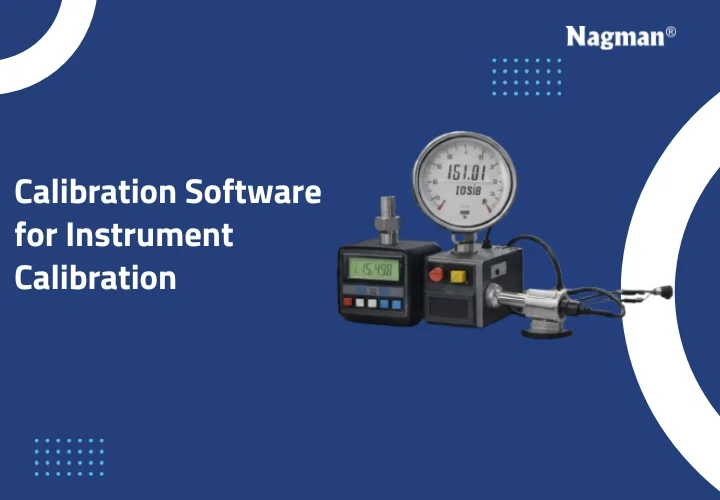
Calibration Software for Pressure Gauge Calibration
Pressure gauge calibration is critical in industries that require precise pressure readings, such as oil refineries, chemical plants, and manufacturing facilities. Even slight variations in pressure can impact safety and product quality.
With digital calibration systems, organisations can effectively manage calibration intervals, record results, and generate compliance reports. The software ensures that no gauge is overlooked and that all calibration data remains traceable.
Pressure gauge calibration is widely performed in calibration labs and industrial testing facilities.
Calibration software ensures pressure gauge calibration records remain accurate, traceable and audit-ready.
Pressure Calibrators Integrated with Digital Calibration Systems
When pressure calibrators are integrated with calibration software, the calibration process becomes faster and more accurate. Data can be transferred directly from the calibrator into the software, reducing errors caused by manual entry.
This integration improves efficiency and ensures data integrity, allowing technicians to focus more on calibration rather than paperwork.
Calibration Software and Calibration Services
When professional calibration services are supported by advanced calibration software, the entire process becomes more structured and transparent. Service providers can deliver detailed digital certificates, historical data, and compliance records.
For businesses, this means better coordination, clearer communication, and complete visibility into calibration activities.
Compliance Applications of Digital Calibration Systems
Calibration software is widely used in:
• Manufacturing and industrial production.
• Healthcare and laboratory equipment management.
• Pharmaceutical and biotechnology sectors.
• Oil, gas, and petrochemical industries.
• Energy facilities and power plants.
• Aerospace and automotive industries.
Why Choose Nagman Calibration Software?
Nagman digital calibration solutions are designed to deliver accuracy, reliability, and compliance through a user-friendly platform. Our solutions automate scheduling, secure data management, and comprehensive reporting to ensure your organisation is always audit-ready.
We also provide specialised support and customised solutions tailored to industry-specific requirements. Our system offers a complete end-to-end calibration management solution through seamless integration and detailed documentation capabilities.
Nagman solutions help industries maintain compliance documentation and improve calibration traceability efficiently.
Conclusion
Calibration is not merely a routine procedure; it is a critical component of quality assurance and operational safety.Modern calibration platforms help industries maintain compliance, improve traceability and simplify calibration documentation.