In industries such as oil and gas, pharmaceuticals, power generation, and manufacturing, even slight measurement variations can lead to operational inefficiencies or costly downtime. This is where process-calibrating instruments are essential for maintaining the accuracy of instruments and control systems.
In this blog, we explain what process calibrators are, how they are used in industries, and how to choose the right calibrator for your operational needs.
What is a Process Calibrator?
A process calibrator is a specialised instrument used to test, measure, and calibrate multiple process instruments, including transmitters, gauges, sensors, and controllers. It ensures that these instruments provide valid readings and operate within the specified tolerances.
These calibrators are common in industries where product quality is directly related to measurement accuracy, safety levels, and compliance with regulatory requirements.
Types of Process Calibrators
Various process calibration instruments are available to measure or simulate specific parameters.
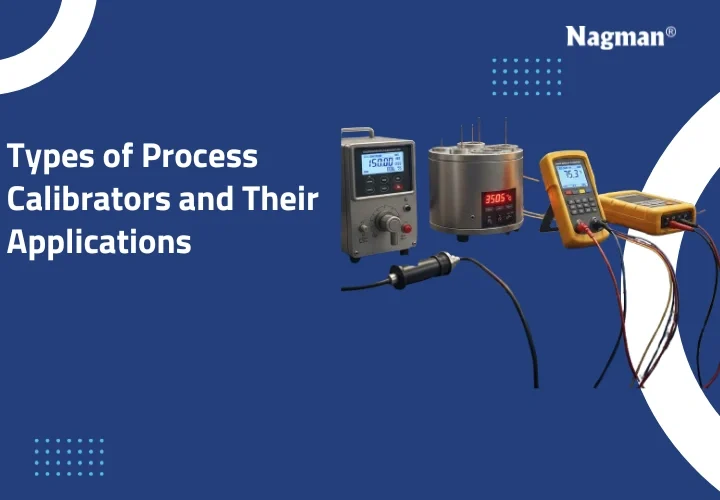
The main types include:
- Pressure calibrators
- Temperature calibrator
- Dry block temperature calibrators.
- Signal calibrator
Pressure Calibrator Used in Process Calibration
A pressure calibrator is an instrument that measures and calibrates pressure instruments like pressure gauges, transmitters, and switches. It produces the exact pressure required to determine whether the instrument is working accurately.
Pressure calibration is essential in industries such as oil and gas, chemical processing, and manufacturing, as accurate pressure readings ensure operational efficiency and safety.
Temperature Calibrators for Industrial Applications
Temperature calibrators are used to check and adjust temperature measurement instruments like thermocouples, RTDs, and temperature transmitters. Accurate temperature control plays a crucial role in the food processing, pharmaceutical, and power generation industries.
These calibrators are used to model temperatures accurately and ensure that temperature sensors provide accurate readings. Professional temperature calibration minimises the risk of product defects, process errors, and process failures caused by non-compliance with regulations.
Dry Block Temperature Calibrator Overview
A dry block temperature calibrator is a portable device used to calibrate temperature without liquid baths. It has a metal block that can be heated or cooled to specific temperatures, and sensors that can be inserted directly into the block for calibration.
This calibrator is highly valued for its ease of use and accuracy. Its use is also common in field applications where fast and efficient temperature calibration is needed.
Uses of Signal Calibrators in Process Industries
A signal calibrator is used to measure and simulate electrical signals such as voltage, current, and resistance. These calibrators are needed to check the accuracy of transmitters, controllers, and other electronic instruments.
Signal calibrators are used in process industries to ensure proper control-system functionality and that electrical outputs meet required standards. They are commonly used in automation systems, power plants, and instrumentation maintenance to ensure consistent process control and operational stability.
Selecting the Right Process Calibrator
Choosing the right process calibrator depends on several factors, including the type of measurement, the industry needs, and the operational environment.
Here are the factors to consider when selecting a calibrator:
The specific parameter that you need to measure (pressure, temperature, or signal).
Required accuracy and compliance standards.
Ease of use and durability in industrial settings.
Availability of multifunction features.
Uses of Process Calibrators
Process calibrating instruments are used across a wide range of industries to ensure accuracy and operational safety.
Common applications include:
- Oil and gas plants for pressure and flow verification.
- Pharmaceutical production for temperature validation.
- Power generation facilities for electrical signal testing.
- Chemical processing units for pressure and temperature monitoring.
- Food and beverage industries for quality control.
Benefits of Using Process Calibrators
Using a professional process to calibrate instruments helps reduce downtime and enhance measurement accuracy and safety across various industrial processes.
Key benefits include:
- Greater accuracy and reliability of process instruments.
- Better product quality and uniformity.
- Fewer equipment failures and maintenance costs.
- Adherence to business standards and regulations.
- Increased operational efficiency.
Why Choose Nagman Process Calibrators
Nagman’s advanced range of process calibrators is designed to provide accuracy, durability, and convenient use across a variety of industries.
With a focus on reliability, customer service, and technical excellence, we ensure your calibration requirements are addressed efficiently and professionally.