Temperature transmitter calibration is the process of checking and adjusting a temperature transmitter against a known reference to ensure that its output accurately represents the measured temperature. It is important in manufacturing, pharmaceuticals, food processing, energy, and other industries where accurate temperature measurement is critical.
Regular calibration of temperature measuring instruments helps maintain measurement accuracy, reduce process errors, support product quality, and improve operational safety. In this guide, we explain temperature transmitter calibration, its procedure, calibration range, HART calibration, temperature sensor calibration, and commonly used standards.
What is Temperature Transmitter Calibration?
Temperature transmitter calibration is the process of comparing a transmitter’s output with a known reference temperature and verifying that the output is within the required accuracy limits.
A temperature transmitter receives an input from a temperature sensor such as an RTD or thermocouple and converts it into a standard output signal, commonly 4–20 mA. Smart transmitters may also communicate digitally through protocols such as HART.
Over time, factors such as ageing, environmental conditions, electrical changes, mechanical stress, and process conditions can affect transmitter performance. Calibration helps identify these measurement deviations and confirms whether the transmitter continues to perform within its specified limits.
Importance of Calibration of Temperature Measuring Instruments
The calibration of temperature measuring instruments is important because inaccurate temperature readings can affect both the manufacturing process and the final product.
Key benefits include:
- Maintains accurate temperature readings, reducing the risk of incorrect process decisions.
- Supports process safety where temperature limits are critical.
- Improves product consistency, particularly in pharmaceutical, food processing, chemical, and manufacturing applications.
- Reduces errors, rework, and material wastage caused by incorrect temperature measurements.
- Supports quality and calibration requirements by maintaining documented measurement records.
- Helps identify instrument drift before it significantly affects the process.
In applications where temperature directly influences product quality or process control, maintaining reliable measurement is especially important.
Calibration Procedure for Temperature Transmitter
The temperature transmitter calibration procedure typically involves comparing the transmitter’s output with a known reference temperature.
Step 1: Prepare the Calibration Equipment
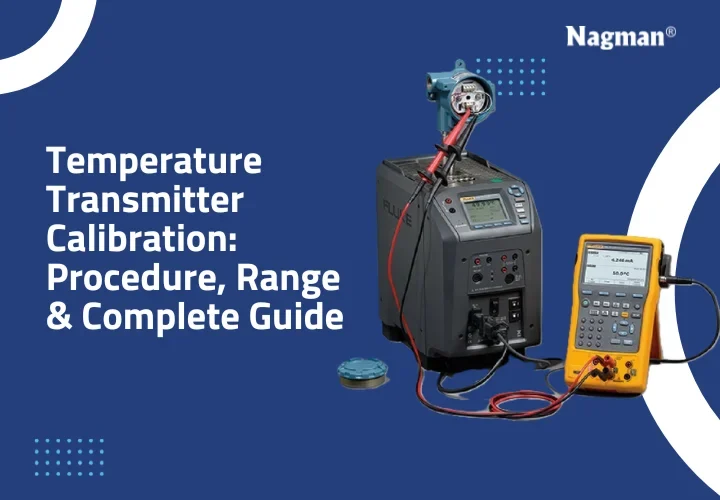
Gather the required equipment, such as a suitable temperature calibrator, dry-block calibrator, reference thermometer, power supply, and HART communicator where applicable.
Step 2: Inspect the Transmitter
Check the transmitter, wiring, connections, sensor input, and terminals for visible damage or other issues before beginning calibration.
Step 3: Apply a Known Temperature
Use a suitable temperature source or dry-block calibrator to provide a known reference temperature to the sensor or transmitter input.
Step 4: Measure the Output
Measure the transmitter output and compare it with the expected output corresponding to the applied reference temperature.
For a typical 4–20 mA transmitter, the output should correspond to the configured temperature range.
Step 5: Adjust the Transmitter
If the measured output is outside the required tolerance, adjust the transmitter using the appropriate calibration tools or software, where adjustment is supported.
Step 6: Verify at Multiple Points
Repeat the test at several points across the measurement range. Testing multiple points helps confirm that the transmitter maintains the required performance throughout its operating range.
Step 7: Record the Results
Document the reference values, measured values, deviations, adjustments, and final results in the temperature calibration report or applicable calibration records.
How to Calibrate a Temperature Transmitter Using a HART Communicator
A HART communicator allows technicians to communicate digitally with compatible smart temperature transmitters and access configuration and diagnostic parameters.
The typical process includes:
- Connect the HART communicator to the transmitter loop.
- Establish communication with the transmitter.
- Review the configured sensor type and measurement range.
- Apply known reference temperature values.
- Compare the transmitter output with the expected values.
- Adjust the required parameters where applicable.
- Verify the output across multiple calibration points.
- Record the final calibration results.
HART calibration should be performed according to the transmitter manufacturer’s instructions and the applicable calibration procedure.
Temperature Transmitter Calibration Range Explained
The temperature transmitter calibration range refers to the lowest and the highest temperature values within which the transmitter is calibrated and expected to perform accurately.
For example:
The transmitter can be calibrated between 0 and 100 degrees Celsius. Another may work between -50 and 300 degrees Celsius.
Calibration is generally performed at various points within this range (e.g., 0%, 25%, 50%, 75%, and 100%). It is essential to maintain accuracy across the entire range for a reliable performance.
Temperature Sensor Calibration and Its Role
The calibration of temperature sensors is closely linked with transmitter calibration. As the transmitter is dependent on the sensor input, any error in the sensor will have a direct impact on the output.
The types of common temperature sensors are the following:
- Resistance Temperature Detectors (RTDs)
- Thermocouples
- Infrared (IR) sensors
Temperature Meter Calibration Process
The temperature meter calibration process ensures that the temperature indicators and display units give accurate readings.
Steps typically include:
- Connecting the meter to a known temperature source.
- Comparing the readings displayed with reference values.
- Adjusting the meter to match the standard.
- Recording results in a calibration report
Temperature Calibration Standards and Guidelines
Temperature calibration should be performed using suitable reference standards and documented procedures appropriate to the instrument and application.
Depending on the industry and calibration environment, organizations may work with requirements and guidance associated with:
- ISO standards and quality systems
- IEC standards
- National metrology and calibration requirements
- Manufacturer specifications
- Customer-specific calibration requirements
The reference equipment used for calibration should have appropriate accuracy and traceability for the measurement being performed.
A temperature calibration chart or calibration record can be used to document reference values, instrument readings, deviations, and other relevant results.
At a Glance
Temperature transmitter calibration is an important process that ensures accurate temperature measurement across various industrial applications. With their focus on regular calibration and maintenance, industries can reduce mistakes, enhance performance and guarantee long-term success.
Looking for suitable temperature calibration equipment for your application? Explore Nagman’s calibration solutions or contact our team for assistance.