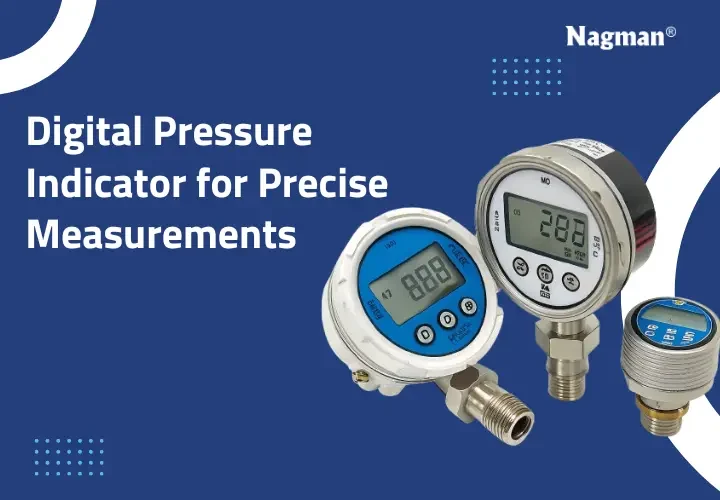
What Is a Digital Pressure Indicator?
A digital pressure indicator is a precision electronic device used to measure and display pressure with high accuracy in industrial and laboratory applications. It uses advanced electronic sensors to convert pressure into clear digital readings, ensuring precise and repeatable results. Unlike analogue gauges, it eliminates needle-reading errors and provides easy-to-read numerical values. Digital pressure indicators are widely used in manufacturing, energy, aerospace, and calibration laboratories where reliable pressure monitoring and pressure gauge calibration are essential.
Why Accurate Pressure Measurement Matters
Pressure plays a critical role in many industrial processes. In hydraulic systems, pneumatic operations, gas pipelines, medical devices, and testing laboratories, maintaining correct pressure levels ensures safety and operational stability.
Inaccurate pressure readings can lead to:
Equipment malfunction
Production inconsistencies
Safety hazards
Increased maintenance costs
Regulatory non-compliance
A digital pressure indicator reduces these risks by providing precise and stable readings, allowing engineers and technicians to monitor systems confidently.
How a Digital Pressure Indicator Works
A digital pressure indicator operates using electronic pressure sensors that convert physical pressure into electrical signals. These signals are processed internally and displayed as numerical values on a digital screen.
This method offers several advantages over analogue systems:
Eliminates parallax reading errors
Provides higher resolution
Enables quick interpretation
Ensures consistent measurement accuracy
Because readings are displayed clearly in numeric format, users can avoid misinterpretation that may occur with needle-based gauges.
Key Features of Digital Pressure Indicators
Modern digital pressure indicators are equipped with features that enhance performance and usability.
Accuracy and resolution:Designed to deliver precise measurements suitable for calibration and critical monitoring tasks.
Clear Digital display:Backlit screens allow easy reading even in low-light industrial environments.
Multiple Measurement Units:Users can switch between bar, psi, kPa, MPa, and other units depending on application requirements.
Data logging: Several models can store the readings to be referenced and analysed later.
Compact and portable design: Lightweight and convenient to use in the field or laboratory.
Connectivity options:Advanced indicators offer USB, RS232, or wireless connectivity for transferring data to external systems.
These features make digital pressure indicators versatile tools across multiple industries.
Applications of Digital Pressure Indicators
Digital pressure indicators are versatile and thus used for multiple applications:
Aerospace and defence: Making sure that measurements are accurate in critical test environments.
Healthcare: Designed for use in medical equipment and laboratory devices to ensure high levels of safety.
Energy sector: In pressure measurement of pipelines, gas plants, and refineries.
Research and development: Used to give precise readings of experiments which require accuracy.
Role in Pressure Gauge Calibration
Calibration is essential to maintain measurement reliability. In pressure gauge calibration procedures, high-accuracy electronic indicators are often used as reference standards.
By comparing readings from mechanical gauges against a certified reference device, technicians can identify deviations and adjust instruments accordingly. Routine instrument calibration ensures compliance with quality standards and prevents costly operational errors.
Accurate calibration improves equipment lifespan, reduces unexpected failures, and enhances workplace safety.
Advantages Over Conventional Gauges
Electronic pressure measurement instruments provide several advantages:
Improved precision
Reduced human error
Faster readings
Better data recording
Enhanced process control
These benefits make them ideal for industries that demand consistent and traceable measurement result.
How to Choose the Right Digital Pressure Indicator
Key considerations include:
Precision needs: Choose a tool that meets the accuracy requirements of your work.
Measurement range: Ensure that the indicator is compatible with the pressures encountered in your operations.
Portability: For on-site use, a lightweight, durable design should be the choice.
Data processing: If data processing is required, indicators with logging and connectivity capabilities are essential.
Budget and compliance: Strike a balance between cost and quality, ensuring the device functions within industry standards.
Why Choose High-Quality Measurement Instruments
Selecting a high-quality pressure measurement device is essential for industries that rely on accurate testing and monitoring. Precision instruments are designed to deliver consistent performance even in demanding environments.
Manufacturers such as Nagman Instruments provide advanced measurement solutions used in calibration laboratories, industrial testing facilities, and research institutions. Their equipment is designed to support accurate instrument calibration, ensuring dependable results in critical applications.
Using reliable equipment improves operational efficiency and enhances process control across industries.
Future of Pressure Measurement Technology
The future of digital pressure indicators lies in smart integration and automation. With increasing adoption of Industry 4.0 technologies, pressure measurement devices are evolving to include:
Real-time monitoring
Cloud-based storage
Remote diagnostics
IoT integration
Predictive maintenance capabilities
These advancements allow industries to monitor systems continuously, detect issues early, and improve operational efficiency.
Conclusion
Accurate and reliable pressure measurement is essential for a wide range of applications. These instruments are widely used to improve pressure gauge calibration in high-precision industries. Thus, they help maintain uniformity and safety in daily operations.
With advancements in technology, their role is expected to grow further and set new standards in measurement accuracy.