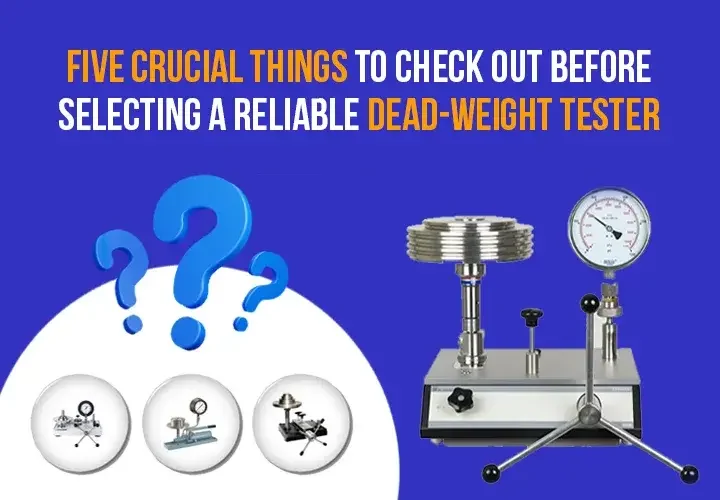
A dead weight tester is one of the most reliable instruments used for pressure gauge calibration in industrial environments. It generates a precise reference pressure that helps technicians verify and adjust the accuracy of pressure gauges and transmitters.
Because pressure measurement plays a critical role in industries such as manufacturing, oil and gas, and power plants, selecting the right pressure calibration instrument is extremely important. With different models available in the market, choosing the most suitable tester for your calibration needs can sometimes be challenging.
Understanding the key features of a dead weight pressure tester helps ensure accurate measurements and long-term calibration reliability. In this Nagman blog, we explain the most important factors to consider before selecting the right tester.
5 Important Factors to Consider Before Choosing a Dead Weight Tester
Selecting the correct equipment for pressure calibration requires careful evaluation. The following factors help engineers and technicians choose the most reliable instrument.
Precision and Accuracy
Accuracy is the primary requirement of any pressure calibration equipment. A high-quality tester must deliver consistent and repeatable pressure readings to ensure reliable calibration results.
Before selecting a tester, carefully review its accuracy specifications and resolution. Instruments with better resolution provide finer measurement control, which improves the reliability of pressure gauge calibration procedures.
Choosing equipment designed with precision-machined components can significantly enhance measurement accuracy.
Pressure Range
Different calibration applications require different pressure ranges. Therefore, selecting a dead weight tester that supports the required pressure range is essential.
Technicians should evaluate the pressure gauges they intend to calibrate and choose equipment capable of generating pressure within that specific range.
A wider pressure range allows a single pressure calibration device to calibrate multiple gauges, improving flexibility in industrial calibration tasks.
Portability and Ease of Use
In many industries, calibration is performed at multiple locations. In such cases, choosing a portable pressure calibration instrument can greatly improve efficiency.
Lightweight testers with ergonomic designs make transportation easier and reduce operator fatigue. Equipment that includes carrying handles and simplified controls allows technicians to perform calibration tasks quickly and efficiently.
A user-friendly calibration device also helps minimize errors during the testing process.
Stability and Durability
Stability plays a vital role in maintaining accurate pressure generation. A stable calibration platform ensures that the generated pressure remains consistent during the testing process.
High-quality testers built with durable materials and precision-engineered components provide better long-term performance. Selecting a reliable pressure calibration system reduces vibration and helps maintain consistent results during repeated calibration procedures.
Durability is also important because calibration instruments are often used frequently in demanding industrial environments.
Pressure Generation Capability
A dependable tester must generate pressure smoothly and consistently across its entire operating range. Reliable pressure generation ensures that the calibration process remains accurate and repeatable.
Look for equipment that includes precision piston-cylinder assemblies and properly calibrated weight sets. These components allow technicians to maintain stable pressure output during pressure gauge calibration.
Consistent pressure generation is one of the most important features of any professional calibration instrument.
Calibration Standards and Traceability
Another important factor to consider is compliance with international calibration standards. Proper calibration procedures require traceability to recognized standards to ensure measurement accuracy.
Choose dead weight testers that comply with standards such as ISO 17025 or ANSI/NCSL Z540-1. Instruments supplied by reputable manufacturers often include traceable calibration certificates and technical support.
Using certified equipment helps maintain reliable calibration processes and ensures measurement consistency across different applications.
Applications of Dead Weight Testers
Dead weight testers are widely used in industries where accurate pressure measurement is essential. Calibration laboratories, manufacturing facilities, power plants, and oil and gas industries commonly rely on these instruments.
They are used to verify the accuracy of pressure gauges, pressure transmitters, and other pressure-measuring instruments. Because of their reliability and precision, these testers remain one of the most trusted solutions for industrial pressure calibration.
Conclusion
Selecting the right dead weight tester is essential for maintaining accurate pressure gauge calibration. Factors such as accuracy, pressure range, portability, stability, and compliance with calibration standards should always be considered before purchasing a calibration instrument.
Investing in high-quality pressure calibration equipment ensures reliable measurement results and improves the overall efficiency of calibration processes.
For industries that require accurate pressure measurement, choosing dependable calibration instruments from trusted manufacturers like Nagman Instruments can significantly enhance calibration performance and long-term operational reliability.