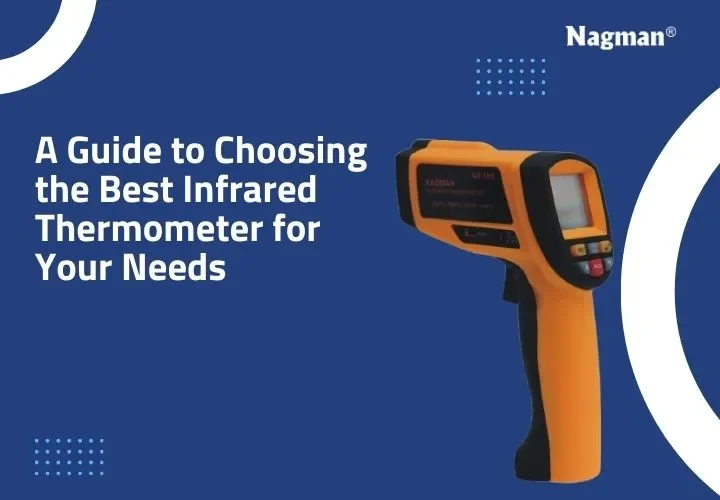
What is an Infrared Thermometer?
An infrared thermometer is a non-contact temperature measurement device that detects infrared energy emitted from an object and converts it into a readable temperature value. These devices are widely used in industrial, medical, HVAC, and food safety applications for quick and safe measurements without physical contact.
How to Use an Infrared Thermometer
- Point the device directly at the surface
- Maintain proper distance based on D:S ratio
- Avoid shiny or reflective surfaces
- Adjust emissivity if needed
- Read the displayed temperature
Using the device correctly ensures consistent and accurate readings.
Introduction
Temperature measurement devices have become essential across multiple industries. From monitoring machinery in factories to ensuring food safety and checking electrical systems, these instruments provide a fast and efficient way to measure temperature.
Nagman Instruments is a trusted provider of calibration and temperature measurement solutions in India, offering reliable and high-precision instruments for industrial and commercial applications.
Understanding infrared thermometer uses and selecting the right model can significantly improve measurement accuracy and operational efficiency.
How Infrared Thermometer Works
To make the right choice, it is important to understand how infrared thermometer works. These devices detect infrared radiation emitted by an object and convert it into an electrical signal, which is then displayed as temperature.
Unlike contact thermometers, this method allows safe measurement of moving, hot, or hazardous surfaces. However, accuracy depends on factors like emissivity, distance, and environmental conditions.
How to Check Accuracy
Before using the device for critical applications, accuracy should be verified. Most instruments come with a standard accuracy range (±1°C to ±3°C), but regular testing is necessary.
Compare readings with a calibrated reference thermometer under controlled conditions. Routine infrared thermometer calibration ensures long-term reliability and precision.
Temperature Range & Accuracy
Different models are designed for different temperature ranges. Some are suitable for low-temperature applications such as food safety, while others are built for high-temperature industrial processes like furnaces and metalworking.
When choosing the best infrared thermometer, always check the specified range and accuracy to match your application requirements.
Distance-to-Spot (D:S) Ratio Explained
The D:S ratio determines how accurately a device measures temperature from a distance. For example, a 12:1 ratio means the device measures a 1-inch area from 12 inches away.
Higher ratios are ideal for industrial environments where measuring from a safe distance is required. Lower ratios are more suitable for close-range measurements.
Importance of Emissivity
Emissivity is a critical factor in accurate temperature measurement. Most devices are preset to 0.95, which works well for common surfaces like painted or organic materials.
However, reflective surfaces such as polished metals have lower emissivity, which can lead to incorrect readings. Devices with adjustable emissivity allow better accuracy across different materials.
Features That Improve Usability
Modern instruments come with advanced features such as:
- Laser targeting for precise measurement
- Backlit display for easy readability
- Data hold and memory functions
- Unit conversion (°C/°F)
Understanding how to use these features effectively improves measurement efficiency.
Real-World Applications
Infrared thermometers are used across various industries:
- Industrial Use: Monitoring machinery temperature to prevent overheating and failures
- Food Industry: Checking surface temperatures without contamination
- HVAC Systems: Diagnosing heating and cooling issues
- Electrical Maintenance: Identifying hotspots in circuits and panels
These practical applications highlight the importance of choosing the right device.
Common Mistakes to Avoid
Even with the right device, errors can occur if used incorrectly:
- Measuring shiny surfaces without adjusting emissivity
- Using incorrect distance (wrong D:S ratio)
- Attempting to measure through glass, steam, or dust
- Skipping regular calibration
Avoiding these mistakes ensures more accurate and reliable readings.
Infrared vs Contact Thermometers
Compared to traditional contact thermometers, infrared devices provide faster and safer readings. However, they require proper understanding of emissivity and distance for accurate results.
Contact thermometers may offer higher precision in controlled environments, while infrared devices excel in speed and convenience.
Maintenance Tips for Long-Term Performance
To maintain performance and accuracy:
- Clean the lens regularly with a soft cloth
- Store the device in a cool, dry place
- Perform routine calibration
- Replace batteries when required
Proper maintenance ensures long-term reliability.
Conclusion
Choosing the best infrared thermometer depends on your application, required accuracy, and proper usage. By understanding how to use an infrared thermometer and how it works, you can achieve consistent and reliable results.
Nagman Instruments offers dependable temperature measurement solutions along with professional calibration services to ensure precision in every application. With the right device and proper practices, you can achieve accurate measurements every time.