Accurate measurement is essential for reliable process control in modern industries. Manufacturing plants, pharmaceutical facilities, chemical industries, power plants, oil and gas facilities, and other process industries depend on instrumentation to monitor and control critical operating conditions.
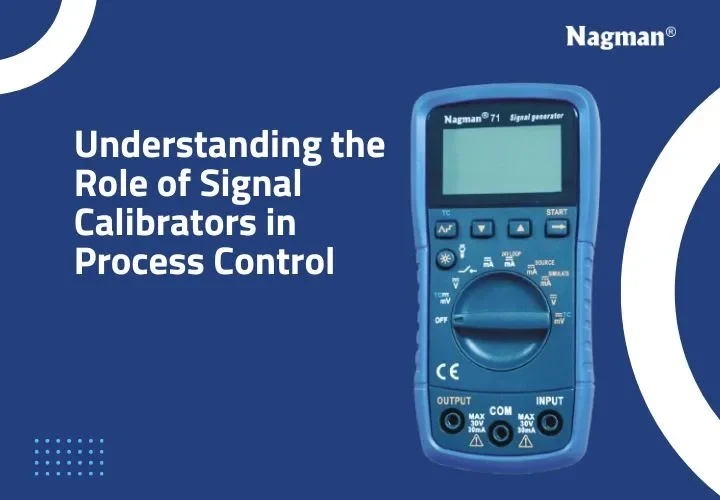
Signal calibrators help verify whether these instruments are producing or receiving the correct electrical signals. They can measure, source, or simulate signals such as current, voltage, resistance, frequency, RTD, and thermocouple outputs. This makes them useful for testing process instruments, identifying signal errors, and maintaining measurement accuracy.
What Are Signal Calibrators?
Signal calibrators are test instruments used to generate, measure, or simulate known electrical signals for checking industrial instrumentation.
For example, a calibrator can provide a known 4-20 mA signal to a process instrument and allow a technician to compare the instrument’s response with the expected value. Any deviation can then be investigated according to the instrument’s calibration procedure.
In simple terms, signal calibrators help answer an important question: Is the instrument giving the correct signal for the measured process condition?
Why Are Signal Calibrators Important in Process Control?
Process control systems rely on accurate signals from sensors, transmitters, and other field instruments. If an instrument develops signal errors, the control system may receive incorrect information and respond incorrectly.
Regular signal calibration helps identify these deviations before they affect the process.
The main benefits include:
- Improved measurement accuracy
- Early detection of instrument drift
- More reliable process control
- Faster troubleshooting
- Reduced unnecessary downtime
- Better maintenance planning
- Improved calibration documentation
- Support for measurement traceability
For critical industrial processes, maintaining accurate instrumentation is an important part of overall equipment reliability.
What Are Signal Calibrators Used For?
The exact capabilities depend on the calibrator model, but signal calibrators are commonly used for testing and verifying several types of process signals.
4-20 mA Signal Testing
The 4-20 mA signal is widely used in industrial process instrumentation. Loop calibrators can source and measure current signals to check transmitters, control loops, and related devices.
Voltage Signal Testing
Voltage signals are used by various sensors, transmitters, and electronic instruments. A calibrator can generate or measure a specified voltage to verify instrument performance.
RTD and Thermocouple Testing
Temperature measurement systems often use RTDs and thermocouples. Suitable calibrators can simulate or measure these signals to help verify temperature transmitters and related instruments.
Resistance and Frequency Testing
Depending on the model, calibrators can also measure or simulate resistance and frequency signals used by different industrial instruments.
Types of Signal Calibrators
Different process applications require different calibration functions. Common types include:
Multifunction Calibrators
A multifunction calibrator combines multiple measurement and sourcing capabilities in one instrument. Depending on the model, it may support mA, mV, voltage, resistance, RTD, and thermocouple signals.
Loop Calibrators
A loop calibrator is mainly used for testing current loops, especially 4-20 mA calibration applications. It is commonly used when checking process transmitters and control loops.
Temperature Calibrators
Temperature calibrators are used to simulate or measure signals from temperature sensors such as RTDs and thermocouples.
Pressure Calibrators
Pressure calibrators combine pressure measurement or generation with electrical signal testing. They are useful for verifying pressure transmitters and other pressure-related instrumentation.
How Does Signal Calibration Work?
The basic signal calibration process involves comparing an instrument’s response with a known reference.
A typical workflow is:
Connect → Apply a known signal → Measure the response → Compare the results → Adjust or document the findings
For example, when testing a transmitter, a technician may apply a known input or simulate a specific signal using a calibrator. The transmitter’s output is then measured and compared with the expected value.
If the difference exceeds the required tolerance, the instrument may require adjustment, repair, or further investigation.
The actual procedure should always follow the manufacturer’s instructions and the applicable calibration requirements.
Applications of Signal Calibrators in Industry
Industrial signal calibration is relevant wherever process instruments need to be tested and verified.
Common applications include:
- Manufacturing and automation
- Pharmaceutical production
- Chemical processing
- Oil and gas
- Power generation
- Food and beverage processing
- Water and wastewater treatment
- Process instrumentation laboratories
In these environments, signal calibrators can be used during commissioning, preventive maintenance, troubleshooting, and periodic calibration activities.
Role of Calibration Software
Modern calibration programs increasingly use digital tools to manage calibration information. Calibration software can help organizations maintain instrument records, calibration history, due dates, test results, and reports.
When combined with suitable calibration equipment, software can make it easier to track instruments across departments or plant locations. It can also reduce manual record-keeping and provide a clearer view of calibration status.
However, software does not replace the need for appropriate reference standards, correct procedures, and trained personnel.
Best Practices for Signal Calibration
To achieve consistent calibration results, industries should follow a structured approach to instrument calibration.
- Use suitable and calibrated reference equipment.
- Follow the manufacturer’s recommended procedure.
- Define calibration intervals based on application requirements and instrument history.
- Maintain accurate calibration records.
- Review previous results for signs of instrument drift.
- Ensure technicians are properly trained.
- Protect calibration equipment from unsuitable environmental conditions.
A well-planned calibration program can help organizations identify recurring problems and improve maintenance decisions over time.
How to Choose the Right Signal Calibrator?
The right calibrator depends on the instruments and signals being tested. Consider:
- Required signal types
- Measurement and sourcing functions
- Accuracy requirements
- Signal range
- Field or laboratory use
- Portability
- Data logging requirements
- Software compatibility
For a technician working with multiple types of process instruments, a multifunction calibrator may provide greater flexibility. For dedicated 4-20 mA loop testing, a loop calibrator may be more suitable.
Signal Calibration Solutions from Nagman
Reliable calibration requires appropriate equipment, suitable reference standards, and a controlled calibration process. Nagman provides calibration solutions for industrial instrumentation, including signal calibrators, multifunction calibrators, loop calibrators, temperature and pressure calibration equipment, and calibration software.
Choosing the right equipment based on the application can help maintenance and instrumentation teams improve testing efficiency and maintain reliable measurement performance.